No products in the basket.
Marine provision plant modernization and HVAC systems
A case study of installation work during a dry dock stay. A comprehensive marine provision plant modernization and air conditioning system overhaul eliminated critical leaks and guaranteed cargo safety.
Fault diagnosis and marine provision plant modernization
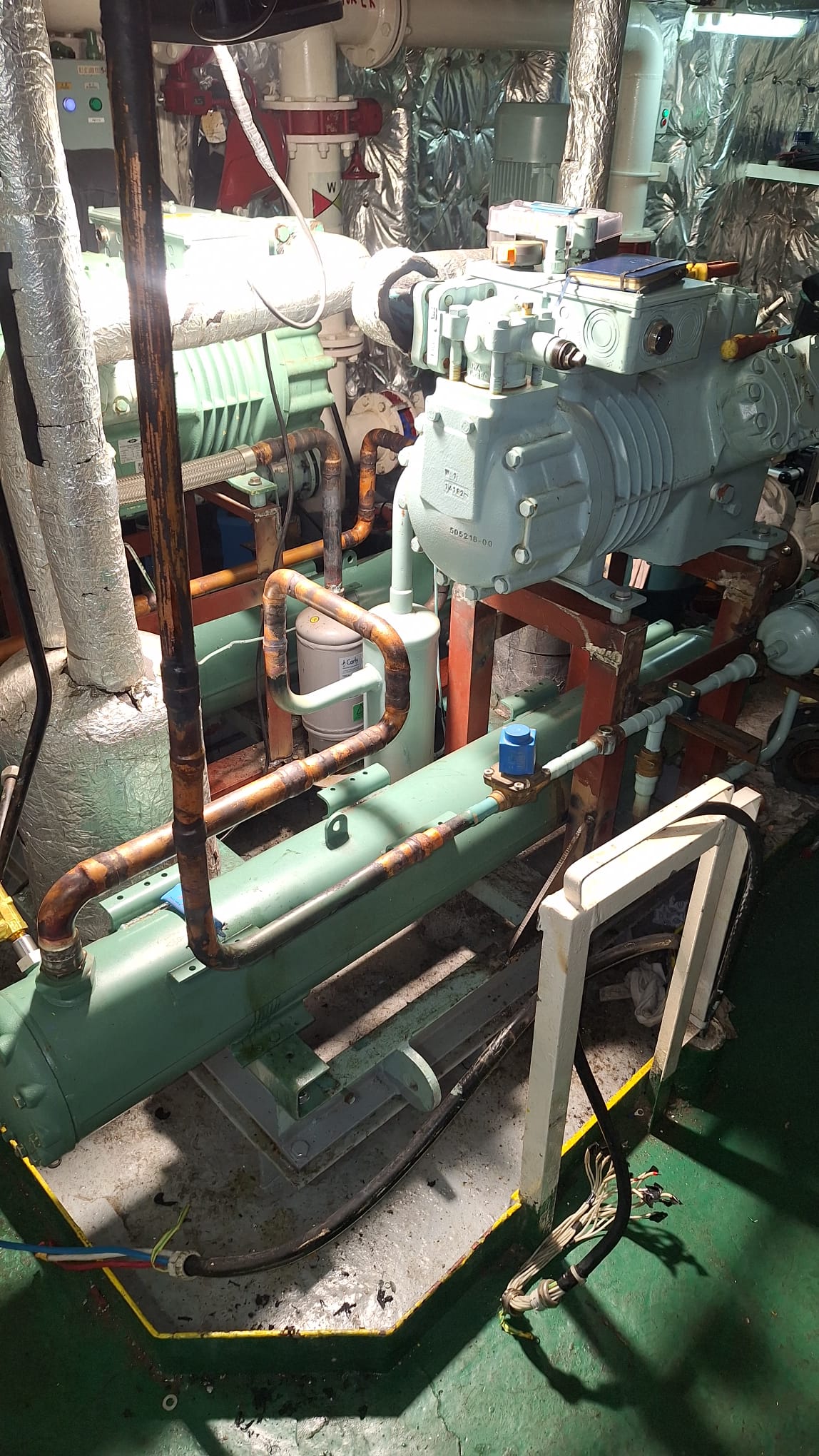
Our marine provision plant modernization began during a scheduled dry dock stay. The Cold World engineering team was called in to diagnose recurring cooling system problems on a commercial vessel. The main challenge turned out to be a severe condenser leak in the superstructure plant, threatening the operational continuity of the vessel. This incident became the direct trigger for a multi-stage overhaul.
Comprehensive system overhaul
Dry dock stay
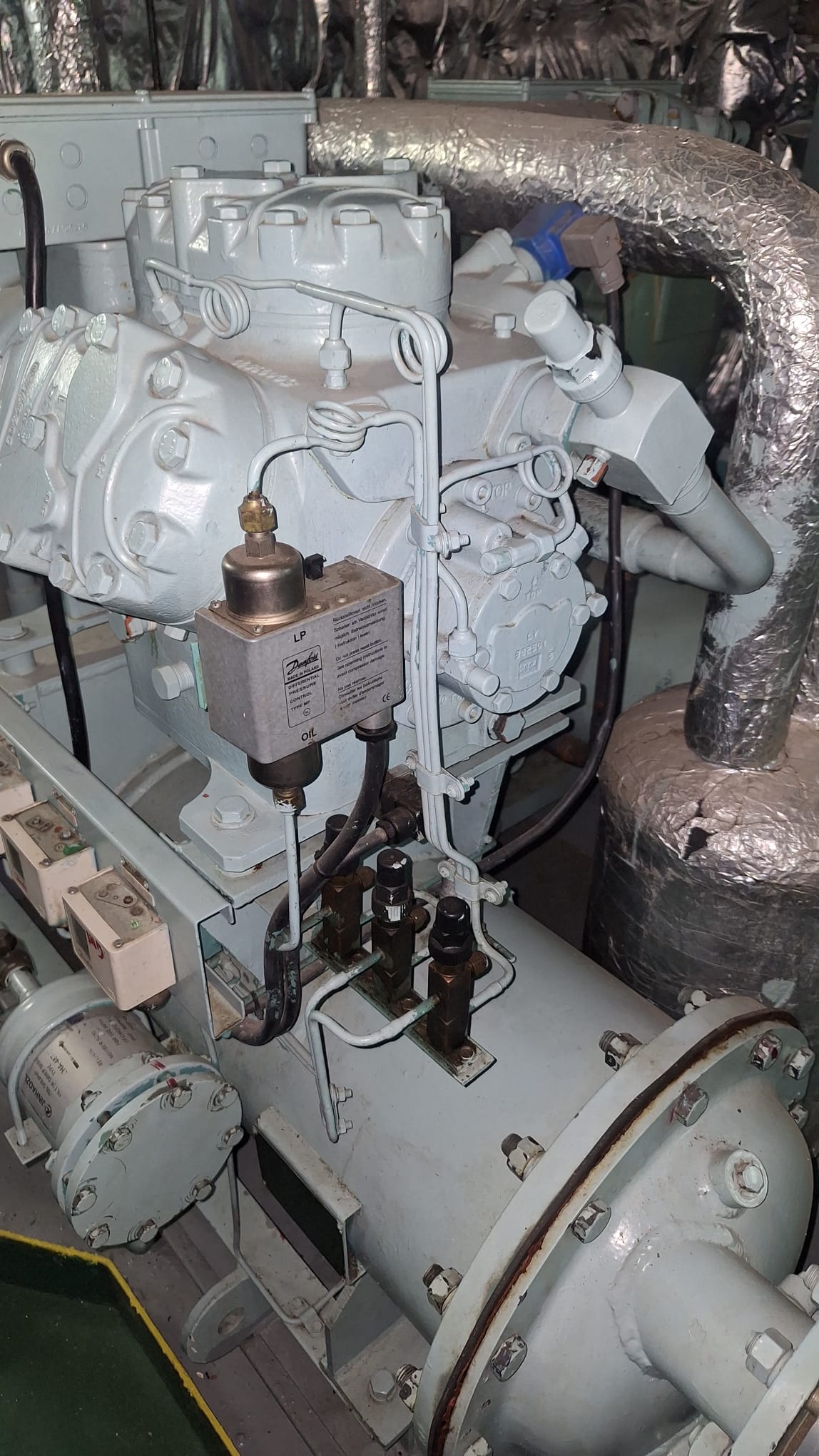
Bitzer, Danfoss, R407C
Compliance with maritime standards
The importance of reliable cooling for the crew
The continuity of the cold chain directly impacts the safety of food supplies and the health of the seafarers. System failures on the open sea can lead to forced port calls and trouble with rigorous Port State Control (PSC) inspections. A timely response prevents costly financial losses for the shipowner, ensuring peace of mind for the captain and the entire crew.
Scope of technical work in the engine room
Installation work in a harsh marine environment requires engineering precision and the use of certified components, which is why our procedures are based on the environmental guidelines of the International Maritime Organization (IMO). Our team completed the following tasks:
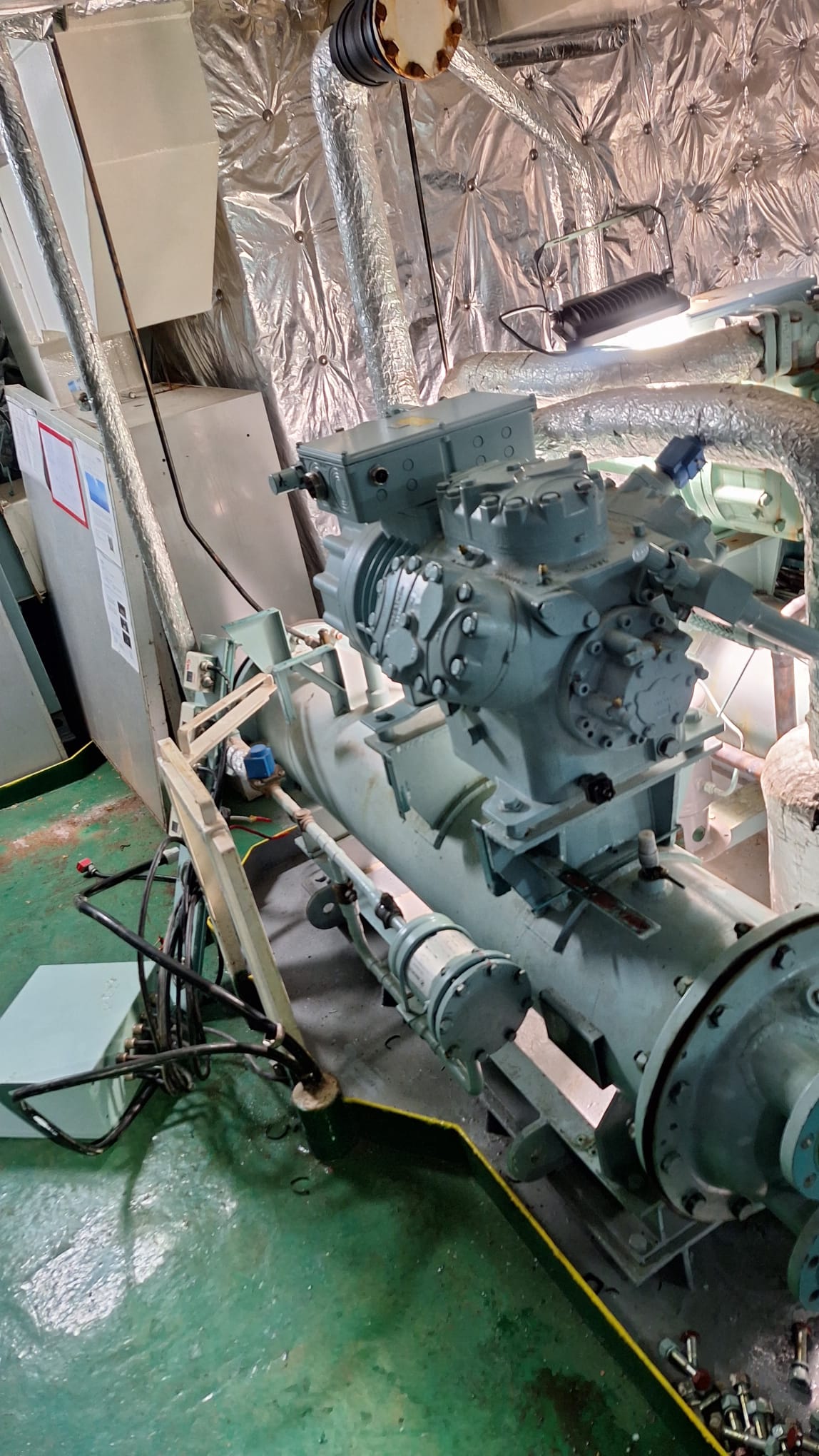
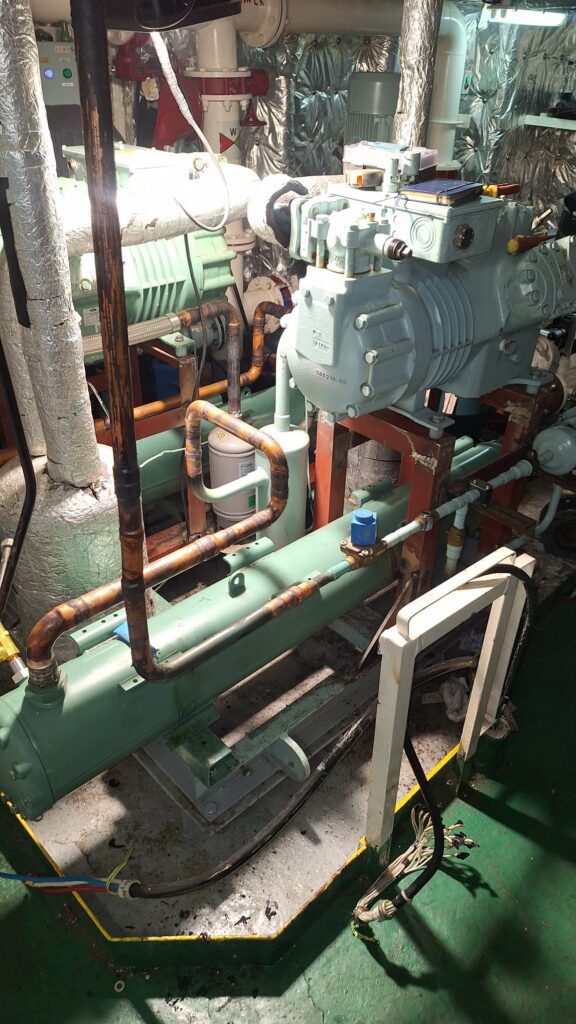
- Accommodation HVAC: We dismantled the worn-out condensers and compressors. On new foundations, we installed Bitzer shell-and-tube condensers (model K1353T). We performed precise system alignment and installed new suction and discharge pipelines. The refrigeration oil was replaced with synthetic Reniso Triton SEZ32, and flexible automation connections were routed.
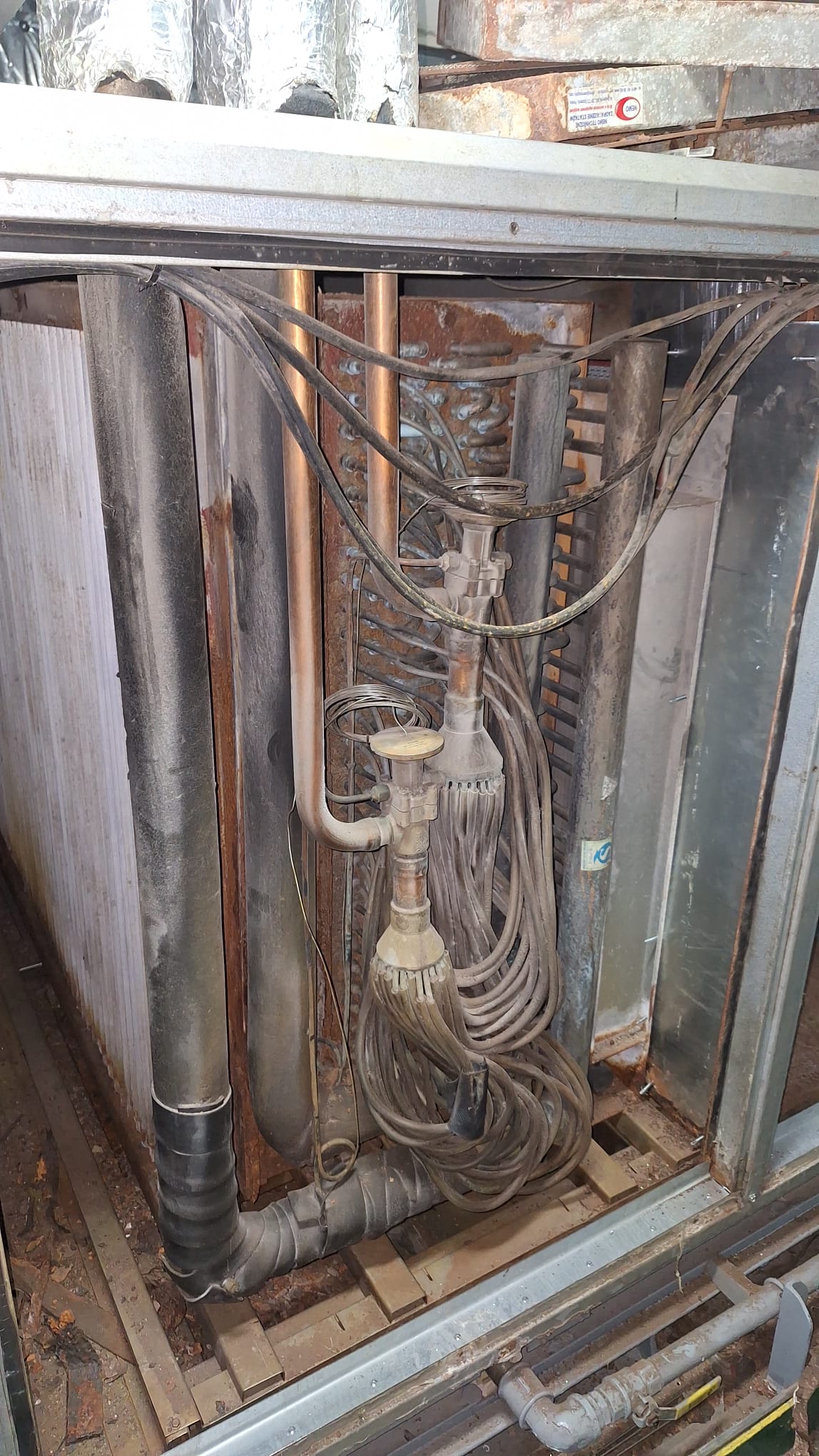
- Food security system: For operational reasons, a difficult relocation of the evaporators in the meat and fish provision rooms was necessary. After physically changing the position of the units, we made new pipeline connections, silver-brazed (hard soldered) for maximum durability.
- Air Handling Units (AHU): We conducted rigorous leak tests on the units serving the Control Room, Galley, and Workshop. On the liquid lines, the filter-drier cores were replaced with proven Danfoss models (DML 163 series).
Pressure tests and commissioning parameters
Every professional intervention in refrigeration systems requires absolute confirmation of tightness. After assembling the piping, the engineers conducted a 24-hour pressure test using dry nitrogen. Subsequently, a deep vacuum (evacuation) of the system was performed down to 500 microns to remove the slightest residues of harmful moisture.
Ultimately, the modernized systems were safely charged with the eco-friendly R407C refrigerant (36 kg per system). The operating parameters after the initial start-up confirmed perfect thermodynamic efficiency: we achieved the correct vapor superheat at 5 K and a stable gas condensing temperature of +37°C. If your fleet is scheduled for a class renewal survey in a shipyard soon, check our extensive engineering competencies.
Photo Gallery