Comprehensive marine air conditioning system rebuild on m/v Sunnavik
Comprehensive marine air conditioning system rebuild on m/v Sunnavik
In January 2024, our engineering team executed an advanced project in the port of Terneuzen. The primary objective of this service intervention was a complete marine air conditioning system rebuild on the m/v Sunnavik, covering the main Air Handling Units (AHU) for both the port and starboard sides.
Detailed scope of installation and assembly works
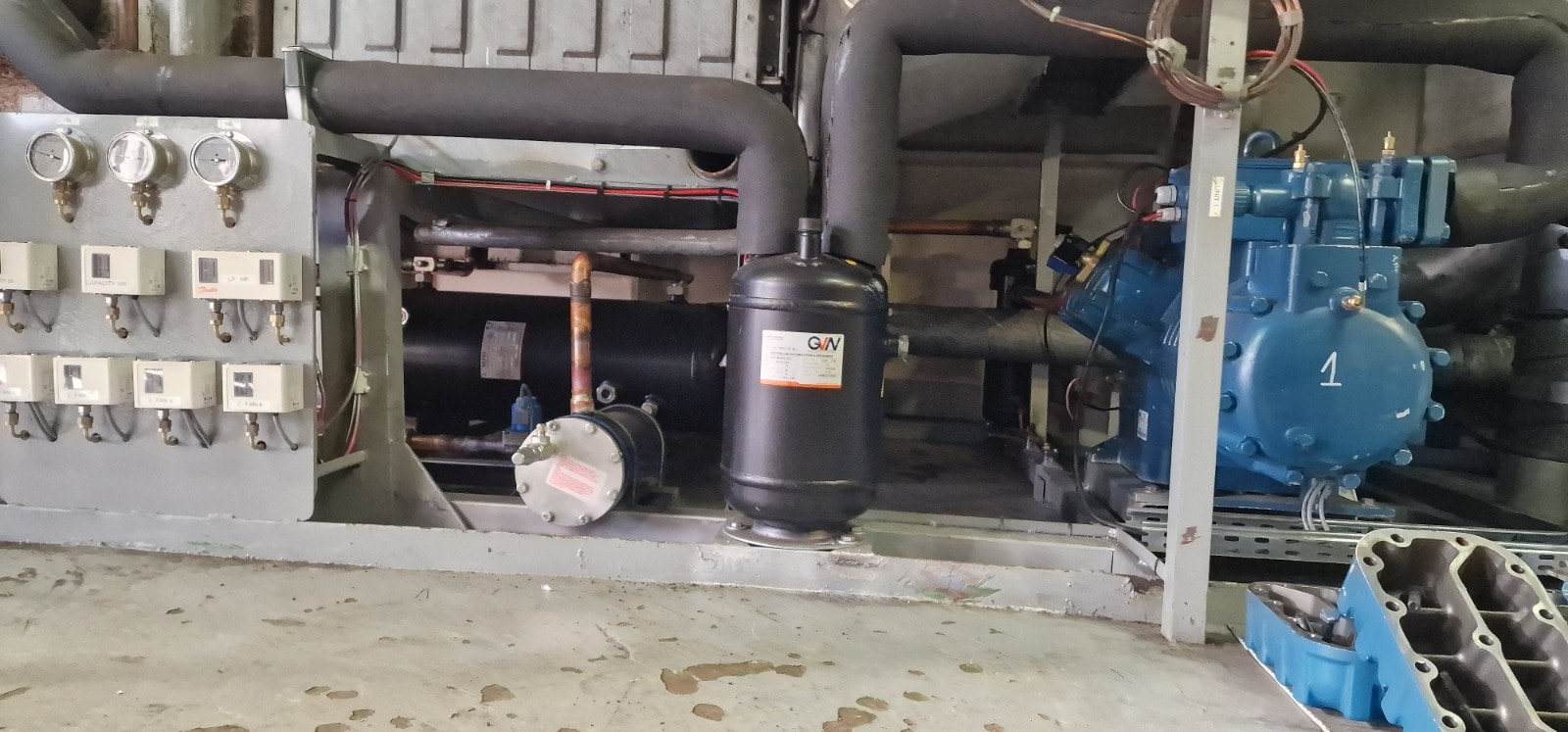
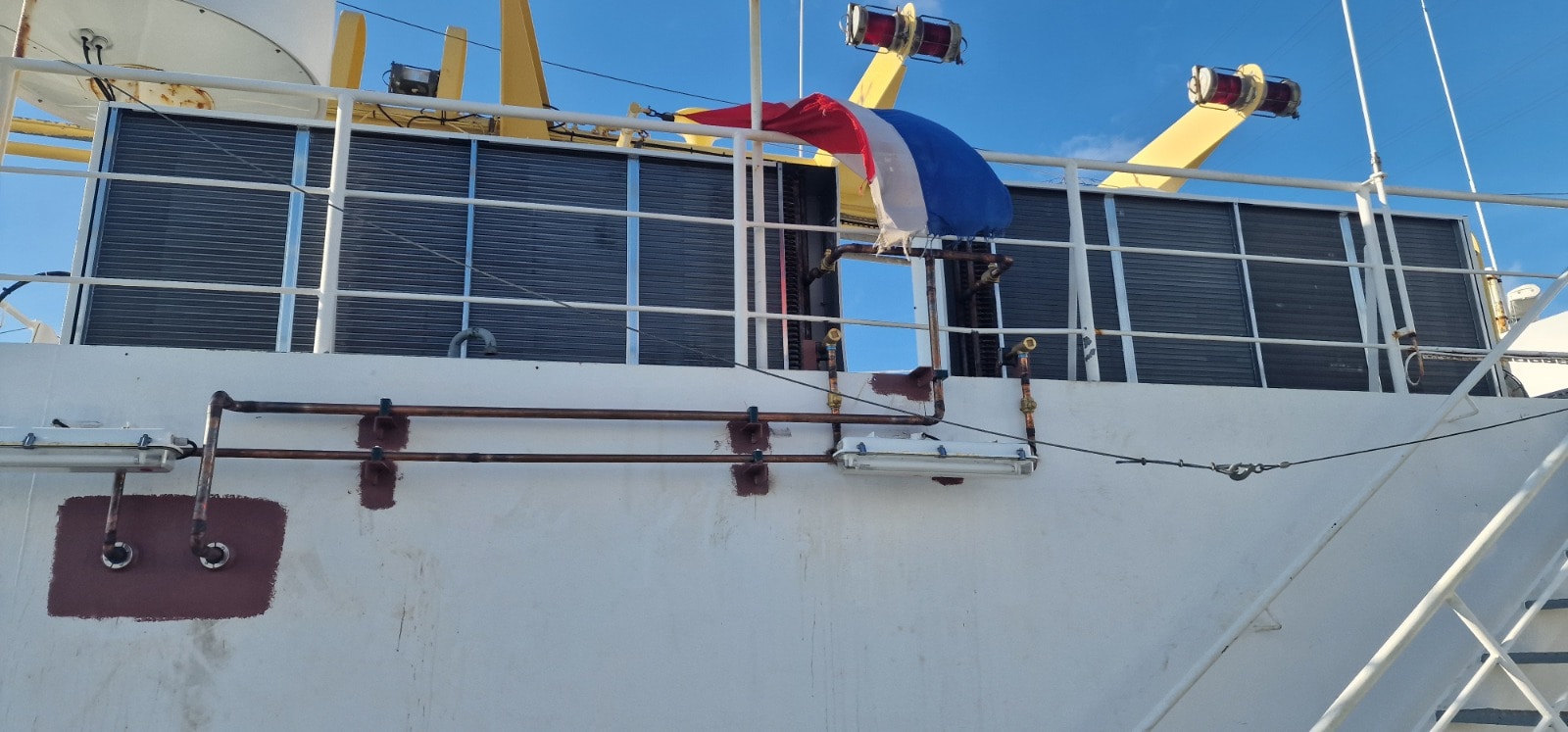
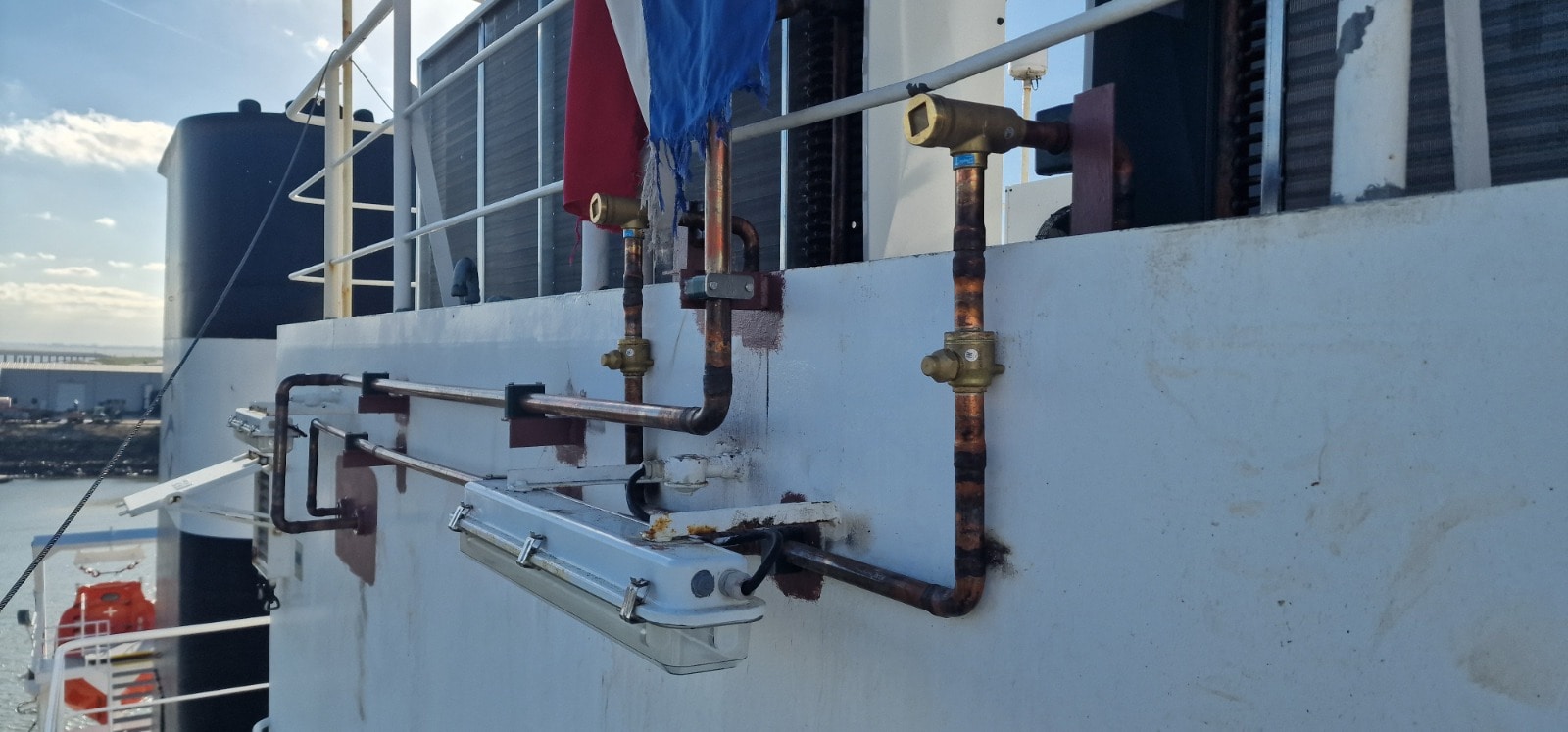
We initiated the project by constructing new foundations beneath the central unit to support the upgraded refrigeration system. At the core of the new setup on each side, we installed a heavy-duty Frascold Z50-168Y compressor. As part of the modernization, new critical refrigeration components were fitted, including an RDYG 40 refrigerant receiver, an oil separator, and a suction accumulator. Additionally, two CJR-612424 air-cooled condensers were mounted on the open deck.
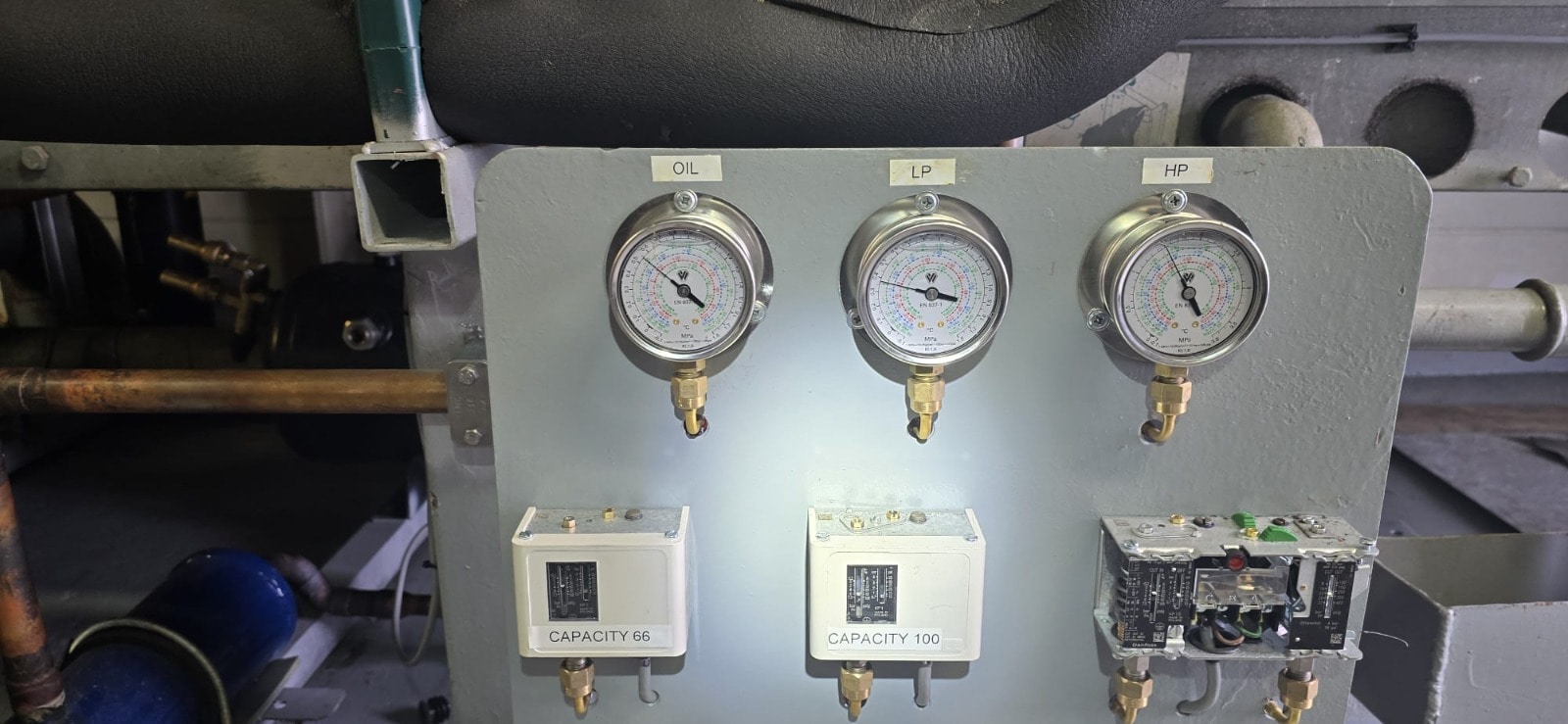
Such an extensive marine air conditioning system rebuild required highly precise pipe prefabrication. During the structural work, hull penetrations were made for the piping, securely sealed using certified Roxtec transit frames. The system was equipped with a brand-new electrical cabinet and control panel: we installed Danfoss KP 15 pressure switches for reliable high-pressure protection and KP 5 units to regulate compressor capacity and fan operation. The liquid and return lines were fitted with high-quality Danfoss armature, featuring GBC shut-off valves, NRV 35 check valves, 48 DM filter driers, EVR 35 solenoid valves, and new TE 55 thermostatic expansion valves with orifice no. 10.
Pressure testing and post-commissioning parameters
The completed freon installation underwent a rigorous 24-hour leak test using dry nitrogen at a pressure of 20 bar. Following positive verification, the system was evacuated to -1 bar and charged with 50 kg of R407C refrigerant.
Operational measurements taken post-commissioning confirmed flawless system performance. The recorded compressor working pressures were: 4.5 bar on suction, 14 bar on discharge, and an oil pressure of 8.5 bar, with the evaporation temperature reaching a stable 5 degrees Celsius. The high-pressure (HP) safety switch engaged correctly, shutting down the compressor at 22 bar, ensuring a safe margin relative to the receiver’s safety valves. In accordance with standard engineering practices, we recommended an oil change for the compressors after approximately 24 hours of continuous running.
Are you looking for a trusted partner to modernize your fleet’s climate control? Discover our full capabilities in marine HVAC design and engineering and professional refrigeration system conversions.
Photo Gallery